Rock-a-bye Baby
Traditional
- Takes about:
- 1 minutes to sing
- Tune:
- Effie Canning’s tune (1886), the one most people know
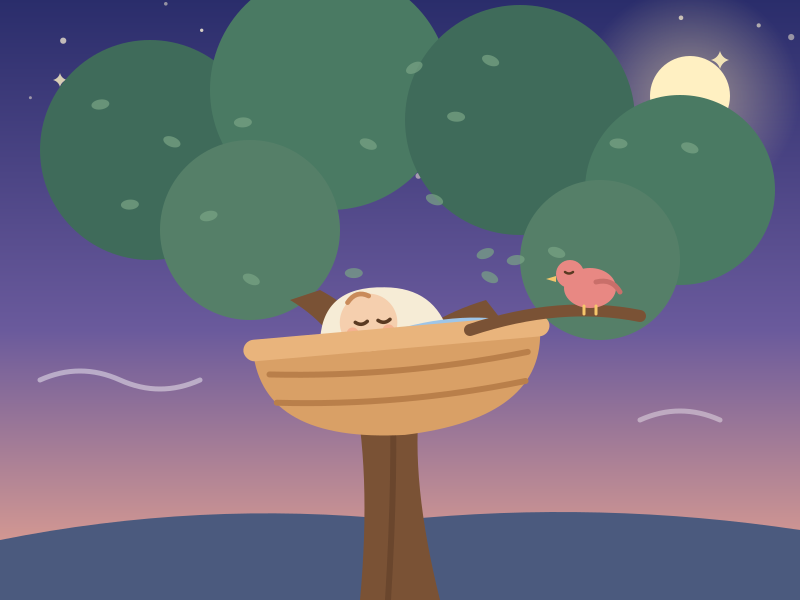
Hush-a-bye, baby, on the tree top! When the wind blows the cradle will rock; When the bough breaks the cradle will fall; Down will come baby, bough, cradle and all.
A gentler ending
If you’d rather your baby’s lullaby didn’t end with a fall, here’s a last verse we wrote to sing after it. It fits the same tune.
Rock-a-bye, baby, the wind’s gone to sleep, The cradle is cosy, the branches are deep; Down come the arms that love you so, To carry you gently to bed below.
Where it comes from
These words were first printed in Mother Goose’s Melody, a book of rhymes published in London in about 1765. Older versions start “Hush-a-bye” and sometimes say the bough bends. Today most people sing “Rock-a-bye, baby” and “down will come baby, cradle and all”.
The tune most people know was published in Boston in 1886, credited to Effie Canning. She said she made it up as a teenager while rocking a baby to sleep. You can read her story on the Library of Congress music blog.
You may have heard that the rhyme is secretly about a king, or a custom of hanging cradles in trees. There’s no good evidence for either story, so we’ll treat it as a rhyme about the wind in the trees.
Old words
- bough: a big branch of a tree.
- hush-a-bye or rock-a-bye: “hush” or “rock” and go to sleep. “Bye” is the same sleepy word as in “bye-byes”.
How to sing it
- Rock or sway on the strong beats: “rock-a-bye ba-by”.
- Sing it twice through, more slowly and quietly the second time, then finish with the gentler verse.
More lullabies

Bye, Baby Bunting
1 min to sing · Lullaby
Golden Slumbers
2 min to sing · Lullaby

Little Star’s Journey Home
3 min to sing · Lullaby